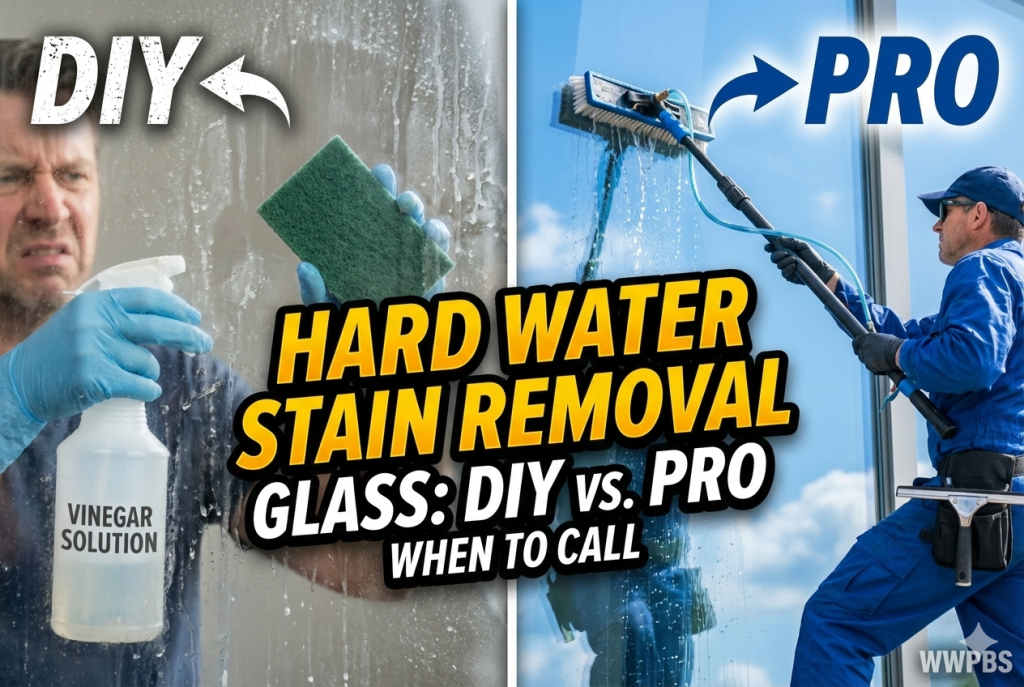
There is nothing quite as satisfying as a freshly cleaned window—until the sun hits it, and you realize those stubborn, cloudy spots didn’t budge. You scrubbed, you squeegeed, and yet, the glass looks like it has a permanent case of the measles.
If you are a homeowner or facility manager here in Rockford, you know exactly what I’m talking about. Hard water stains are a ubiquitous frustration in the Stateline area. They aren’t just dirt; they are mineral deposits that have bonded to the glass surface. The question isn’t just how to get them off, but who should take them off. Is this a Saturday afternoon DIY project, or is it time to call in a professional?
Let’s break down why these stains happen, how to tackle them safely, and the critical tipping point where professional restoration becomes necessary to save your glass.
What Causes Hard Water Stains on Windows
To defeat the enemy, you have to understand the chemistry. Hard water stains are essentially what is left behind when water evaporates but the minerals dissolved within it stay for the party.
Mineral Buildup from Irrigation
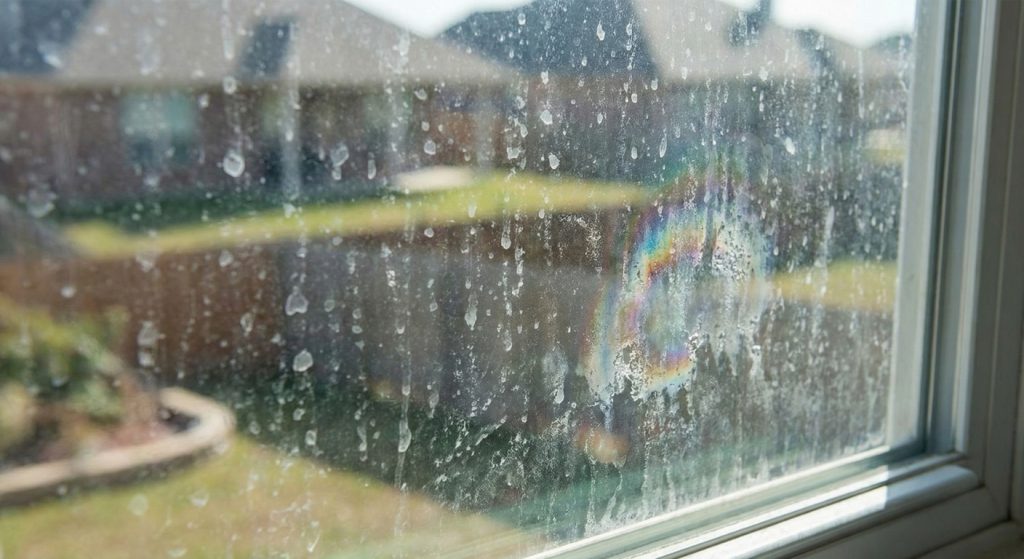
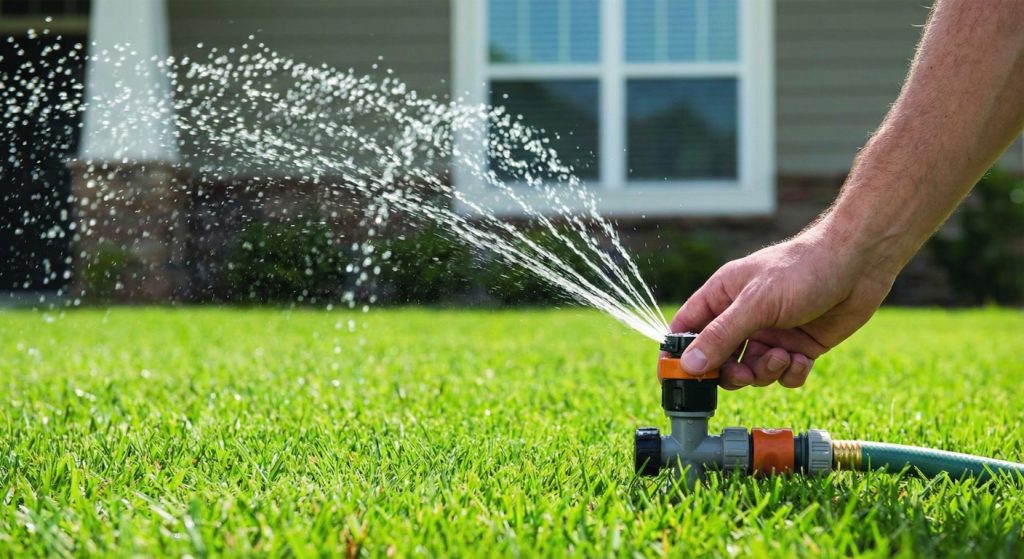
The most common culprit we see on residential properties is the lawn sprinkler system. Groundwater in Northern Illinois is rich in calcium, magnesium, and other dissolved solids. When sprinkler heads are misdirected and hit your windows, the water dries in the sun, baking those minerals onto the glazing. Over repeated drying cycles, these layers calcify, creating a rough texture that standard glass cleaner cannot dissolve.
Environmental Contributors
It isn’t just the sprinklers, though. Rainwater, while generally softer, can pick up construction dust, pollen, and pollutants as it runs down the side of a dirty building. Here in the Midwest, we also have to contend with the “splashback” effect during winter. Road salts and brine tracked onto driveways can end up misting onto lower-level windows, accelerating the chemical bonding process.
Early Warning Signs vs. Advanced Staining
Not all spots are created equal.
- Stage 1 (Light Spotting): The spots are visible but feel relatively smooth. They likely haven’t bonded chemically yet.
- Stage 2 (Etching): The glass feels rough to the touch (like sandpaper). The minerals have started to eat into the microscopic pores of the glass. This is where cleaning stops and “restoration” begins.
DIY Hard Water Stain Removal Methods
If you catch the spotting early—Stage 1—you can often manage it with household items and a little elbow grease.
Common DIY Approaches
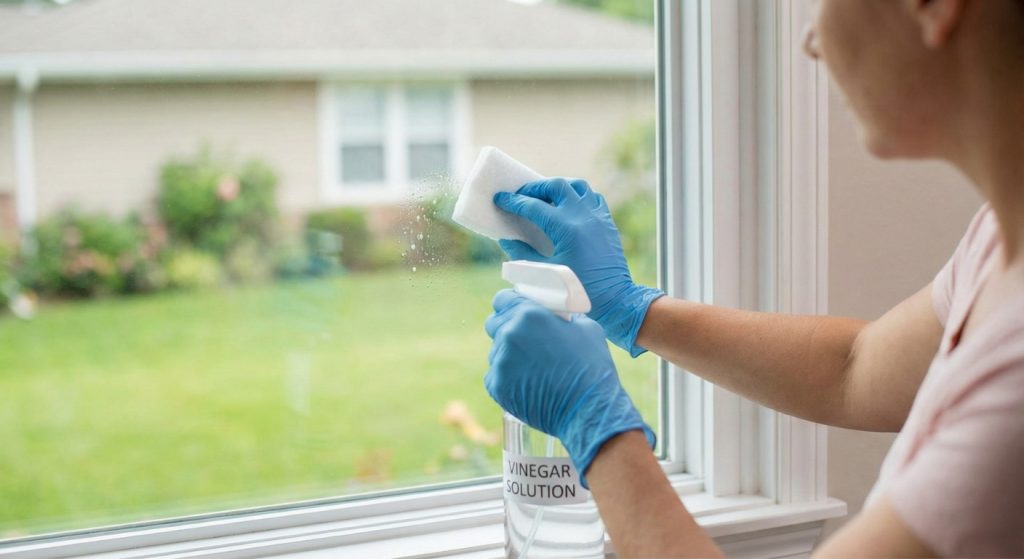
The internet loves a good vinegar hack, and for good reason. A 50/50 mixture of distilled white vinegar and water can help dissolve mild calcium deposits because the acid neutralizes the alkaline minerals.
For slightly tougher spots, you might find commercial “water spot removers” at the hardware store. These usually contain stronger acids or mild abrasives. Some homeowners also swear by 0000 steel wool (super fine) or clay bars, similar to what you would use on car paint.
A Step-by-Step Safe DIY Process
If you are determined to try this yourself, proceed with caution:
- Test a Small Area: Pick a bottom corner of a window that isn’t eye-level.
- Apply Solution: Soak the area with your vinegar mix or cleaner. Let it dwell for a minute—chemicals need time to work.
- Agitate Gently: Use a non-abrasive white scrub pad. Do not scrub aggressively.
- Rinse and Squeegee: Thoroughly rinse the chemicals away and squeegee dry to check your results.
Realistic Expectations
DIY methods are generally effective for maintenance, not restoration. If the spots have been there for years, vinegar is unlikely to make a dent. Furthermore, doing this by hand on a whole house is physically exhausting work.
Limitations and Risks of DIY Removal
While I admire the DIY spirit, glass is surprisingly fragile when subjected to friction and chemicals.
Scratching and Glass Damage
This is the most heartbreaking thing I see as a professional. A homeowner tries to use a green kitchen scouring pad or a razor blade incorrectly and ends up scratching the glass. Hard water stains are ugly, but scratches are permanent. Once you scratch the glass, the way light refracts through it is ruined forever.
Seal and Frame Damage
Glass doesn’t exist in a vacuum; it sits in a frame. Harsh acids or heavy alkaline cleaners can drip down into the window sills and sashes. If you have vinyl frames, they can discolor. If you have wood frames, the chemicals can compromise the varnish or paint. Worse yet, if you saturate the edges too much, you risk damaging the thermal seal, leading to foggy windows (seal failure).
Safety Considerations
Scrubbing a hard water stain requires leverage and pressure. Doing that while standing on a ladder 20 feet in the air is a recipe for disaster. If the window is higher than you can reach while standing on the ground, the risk-to-reward ratio of DIY drops significantly.
When to Call a Professional Window Cleaner
There is a distinct line where general cleaning becomes specialized restoration. If you’ve tried the vinegar and the scrubbing and the spots remain, you are likely dealing with chemical etching.
Signs DIY Is No Longer Effective
- The Rainbow Effect: If the glass looks hazy or shows a rainbow-colored sheen, the minerals have penetrated the surface.
- Tactile Roughness: If you run your hand over the glass after cleaning and it still drags, the deposit is too thick for standard removal.
Time vs. Results Calculation
For businesses and larger homes, the sheer volume of glass makes DIY impractical. What might take a homeowner an entire weekend to do (with mediocre results) can often be achieved by our team in a few hours with superior results.
The Professional Hard Water Stain Removal Process
At Work Wonders Professional Building Services, we approach hard water stains differently than standard dirt.
Inspection and Assessment
We start by identifying the type of glass (tempered, annealed, etc.) and the severity of the stain. This dictates which compound we use. We don’t guess; we test.
Professional Restoration Techniques
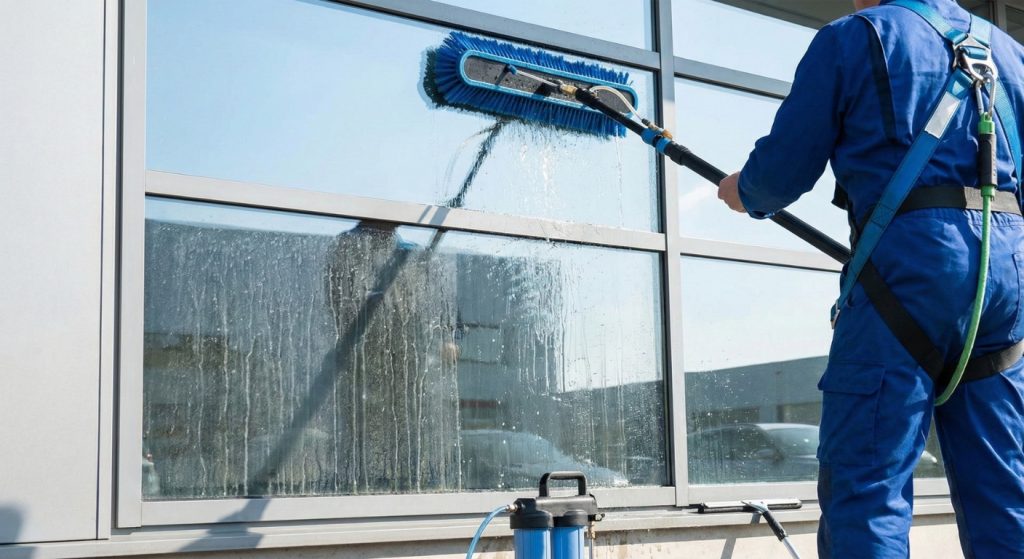
We utilize specialized, professional-grade acidic cleaners and mechanical polishing systems designed specifically for glass restoration. These compounds are strong enough to break the mineral bond but safe enough to preserve the glass surface.
Unlike the DIY approach, we also utilize Pure Water Technology. After polishing the glass, we rinse it with water that has been filtered to 0 TDS (Total Dissolved Solids). This acts as a “hungry” sponge, absorbing any remaining residue and drying completely spot-free without the need for towel drying.
Protecting Warranties
High-end windows often come with manufacturer warranties that can be voided by using improper chemicals. As professionals, we know which products are approved for use on Pella, Anderson, and other major window brands common in Rockford homes.
Prevention Strategies to Avoid Future Stains
Once we get your glass crystal clear, we want to keep it that way.
- Adjust Your Sprinklers: This is the #1 prevention method. Have your irrigation company adjust heads so they spray away from the house.
- Routine Cleaning Cadence: Regular cleaning prevents minerals from having the time to bond. We recommend a professional window cleaning service at least twice a year in our climate.
- Protective Sealants: For glass in high-risk areas, we can apply hydrophobic sealants (like Rain-X on steroids) that repel water and prevent minerals from sticking.
Cost vs. Value Considerations
Is professional removal worth it? Consider the alternative: Glass Replacement. If hard water stains are left untreated for too long, the etching becomes irreversible, and the only solution is to replace the glass unit. Replacing a single thermal pane window can cost hundreds of dollars.
Professional restoration is a fraction of that cost. It extends the lifespan of your windows and instantly boosts your property’s curb appeal.
FAQ: Common Questions from Our Customers
Q: Will pressure washing remove hard water stains? A: Generally, no. In fact, using high pressure on glass can be dangerous. Standard pressure washing removes loose dirt, but it won’t dissolve the mineral bonds of hard water stains. Those require chemical and mechanical agitation, not just water pressure.
Q: Can hard water stains permanently damage my windows? A: Yes. Glass is porous on a microscopic level. If minerals like calcium and magnesium are left to sit, they eventually corrode into the glass, creating permanent “etching” that cannot be cleaned off, only polished out or replaced.
Q: How often should I clean my windows to prevent this? A: In Rockford and the surrounding Midwest areas, we recommend a professional cleaning in the Spring (to remove winter salt/grime) and in the Autumn. Regular maintenance is much cheaper than restoration!
Don’t let cloudy glass ruin your view. If you are tired of looking at your windows instead of through them, let’s fix it. At WWPBS, we have the tools and the expertise to restore clarity to your home or business.
Contact Us Today to Get a Quote

Proudly powered by My Business Web Design